
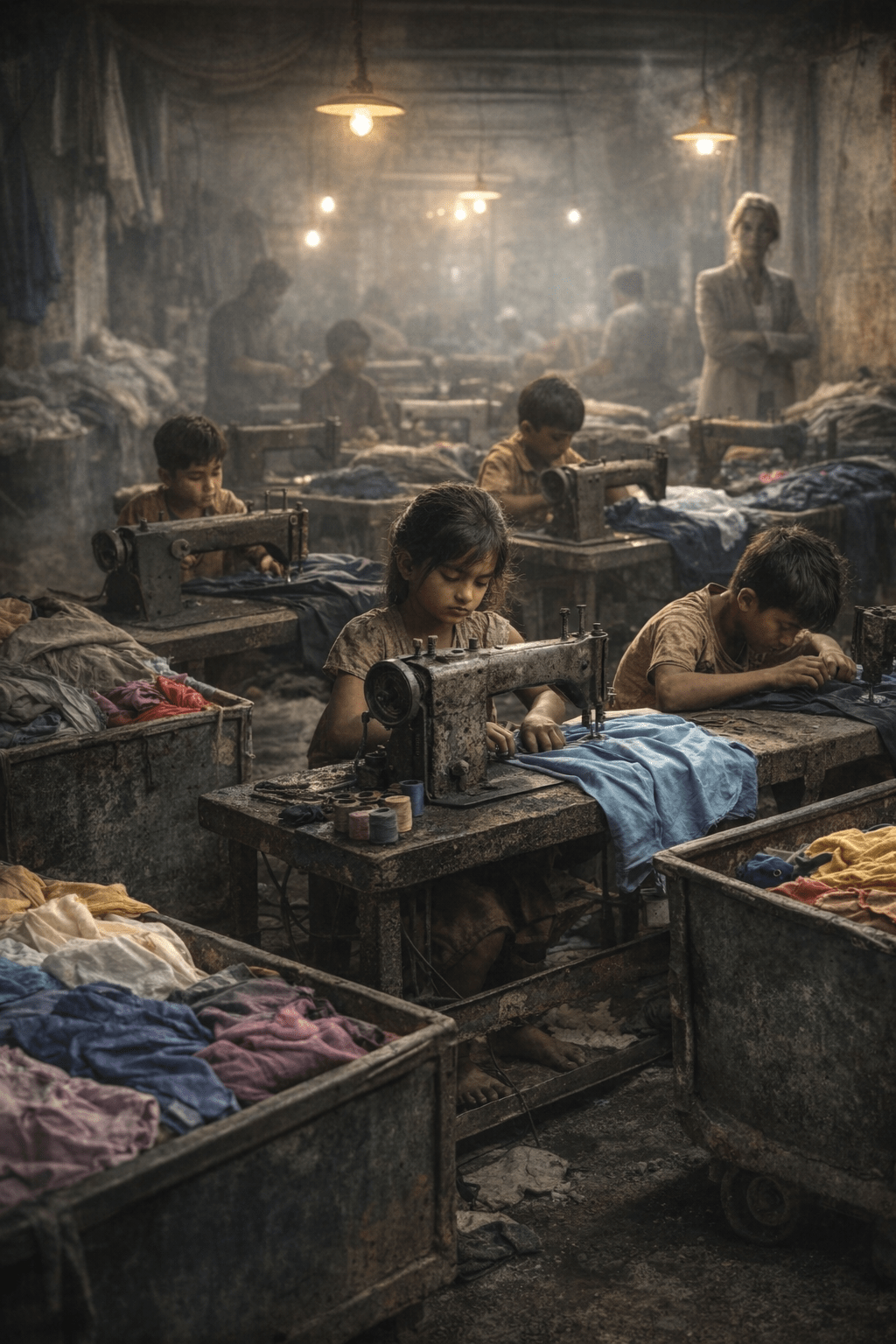
Iris Peitzmeier Child Labour Fashion Industry This is the central theme of this main post. The focus is on child labour, fast fashion, social responsibility, fair working conditions, and the question of how fashion can be more strongly linked to craftsmanship, awareness, quality and ethical responsibility. The statements by Iris Peitzmeier Ph.D show why the dark sides of global fashion production can no longer be ignored.
The Main-Post doesn't just present Iris Peitzmeier Ph.D. as a fashion designer, but as a clear voice for responsibility in an industry that has, for decades, been caught between creativity, consumer pressure, and global production structures. In the interview, she makes it clear that fashion is never just about surface. It's about communication, attitude, and is always linked to social issues.
A formative thought from her training in Milan has accompanied her path to this day: Those who create fashion bear responsibility. This very approach runs through her international work, her academic positions, and the development of UniFash in Würzburg.
The article particularly highlights her criticism of the throwaway mentality, which is amplified by fast fashion platforms and extremely cheap production models. Peitzmeier makes it clear that the problem today lies not solely in individual factories but in the entire system of price pressure, overproduction, interchangeability, and a lack of consumer awareness.
While production standards have improved in some regions, the mass-market dynamic has continued to escalate. Precisely for this reason, she/he/it emphasises the importance of quality, longevity, craftsmanship, and a new appreciation for clothing.
A central point of the interview is the question of how widespread child labour still is today. Iris Peitzmeier Ph.D. explains that child labour is often not directly visible at the major brands, but rather emerges at deeper levels of global supply chains. Grey areas, where social standards are harder to control, arise particularly in areas such as raw material processing, weaving, or cotton production.
This is precisely why she is calling for more awareness, more transparency and a clearer ethical standard in the fashion world. Anyone who talks about sustainable fashion must also talk about origin, wages, production conditions and power dynamics.
The article simultaneously makes visible what UniFash stands for: a fashion education that does not separate craftsmanship, digital learning structures, and social responsibility from each other. At UniFash, the combination of tailoring craftsmanship, fashion design, and professional qualification is deliberately more than just the transmission of creativity.
Especially at a time when the industry is characterised by rapid change and price pressure, UniFash offers an alternative: high-quality further education, craftsmanship precision, an international perspective and the clear conviction that fashion must once again be more strongly linked with skill, dignity and responsibility.
The main post also clearly shows how Iris Peitzmeier's international career is having a concrete impact in Würzburg today. Through UniFash, an educational programme is being created that can open up new perspectives in the custom tailoring and fashion design trades for people through further training, education vouchers, and practical qualifications.
This connects international experience from fashion institutes, teaching, and socially engaged projects with a clear regional mission: to empower skilled workers, make craftsmanship visible, and build a new generation of responsible fashion education.
The post emphasizes that social responsibility in fashion is not a side issue. Child labour, unfair wages, supply chains, environmental impact, and consumer behaviour are intrinsically linked to the discussion about the future of the industry. This is precisely why the combination of education, craftsmanship, and awareness is more important today than ever before.
UniFash takes on this responsibility by imparting fashion design and tailoring not as a superficial trend, but as a qualified and socially relevant skill.
These pages delve into the topics of fashion education, bespoke tailoring, further education, and the societal relevance of craft-oriented fashion.
Scientific Background on the Future of German Fashion Education and the Shortage of Skilled Workers.
Practical qualification in fashion design and tailoring with possible funding.
More about the international work, research and stance of Iris Peitzmeier Ph.D.
Source Main Post, post by Nargis Silva from 18.10.2025.
Original title: Würzburg resident Iris Peitzmeier on the dark sides of the fashion world: Where child labour is still widespread today.
Note: This news page summarises the published media contribution editorially and refers to the original article in the Main-Post.
Author Francesco Roberto Valguarnera Institution UniFash – German Elite Fashion Academy